The history of the Terezín fortress began on January 10, 1780, when Field Marshal Karl Pellegrini informed the Prague Land Engineering Directorate of Emperor Joseph II’s decision to construct a strategic fortification complex. This was a response to the ongoing Prussian threat in the area between the villages of Německé Kopisty and Travčice on the Ohře River. The future town was named Terezín in honor of Empress Maria Theresa. In the summer of that same year, extensive earthworks began alongside the regulation of the Ohře River, and on October 10, 1780, Emperor Joseph II himself laid the foundation stone.
Over the course of eleven years, under the guidance of the Mézières French engineering school, the most advanced fortress system of the 18th century rose from the landscape. Spanning a total area of 398 hectares, the complex consisted of a main fortress, a small fortress, and two retranchements (upper and lower) situated between the New and Old Ohře rivers.
Architectural Structure and Defense System
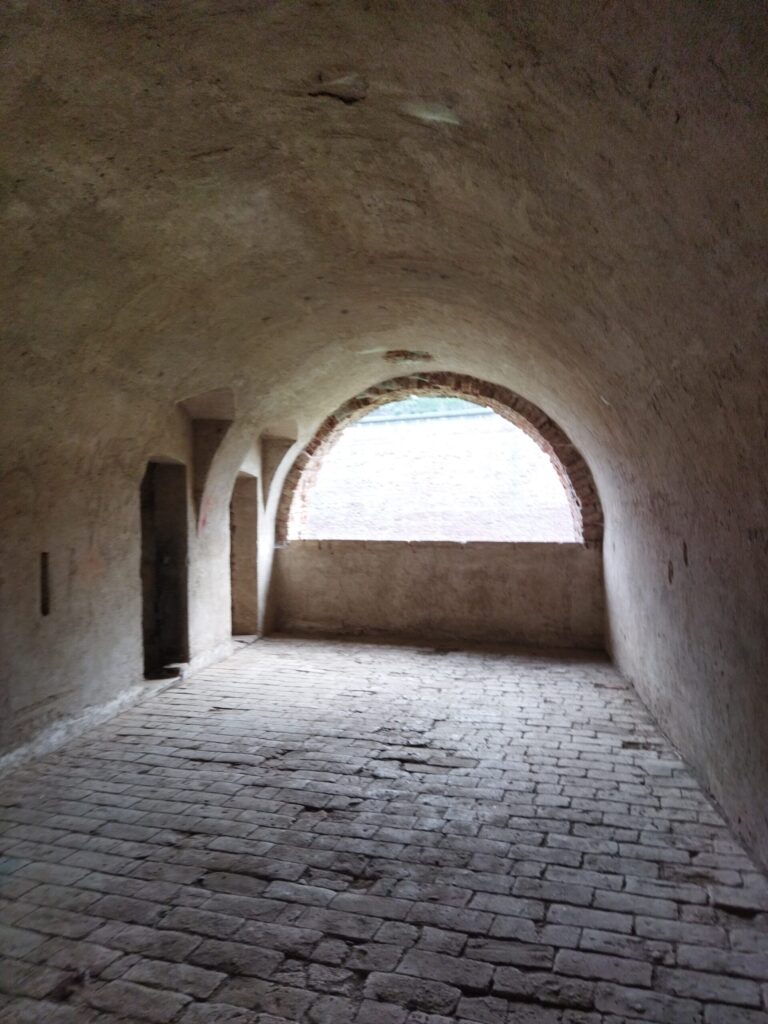
The inner perimeter of the main fortress formed a regular octagon complemented by eight pentagonal bastions and an equal number of connecting curtains. A massive main ditch surrounded the entire perimeter, housing elements of the middle defense line—pincer works (kleště), ravelins, and counterguards. A system of sluice gates allowed the ditch to be entirely or partially flooded with water. The outer defensive ring consisted of a covered way formed by an earth rampart along the counterscarp (the outer wall of the ditch), lunettes protecting assembly areas XXVII through XXXVI, and expansive flood basins. Areas lacking natural water protection were laced with a dense network of underground listening and mining tunnels branching perpendicularly outward from the main gallery up to a distance of 80 meters.
The Small Fortress took the shape of an irregular rectangle with four bastions. Its inner rampart was protected in the south by pincer works and an advanced ravelin with artillery positions, while the outer rampart was guarded by a covered way with transverse traverses. A fortification arrow (šíp) built along the axis of Bastion II pointed toward the basin’s foreground.
The upper and lower retranchements exhibited the lowest degree of fortification, consisting primarily of earthen ramparts with water ditches featuring outer walls built to a height of 2.6 meters. These spaces served exclusively military purposes as troop encampments during military campaigns, with the capability of being flooded. Six gates with drawbridges provided the only connections between the enclosed fortress and the outside world.
Garrison, Supply, and Urban Development
In peacetime, the Terezín garrison was intended to number 5,655 men, a figure that could double in wartime. A total of 153 gunpowder stores with a combined capacity of up to 1,420 tons of gunpowder provided munitions storage. Food logistics were supported by a bakery and storehouse in Cavalier II, alongside extensive fodder reserves for 6,500 horses. The entire logistical system was designed to sustain the garrison and a field army of 60,000 men for three and a half months.
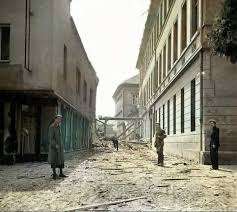
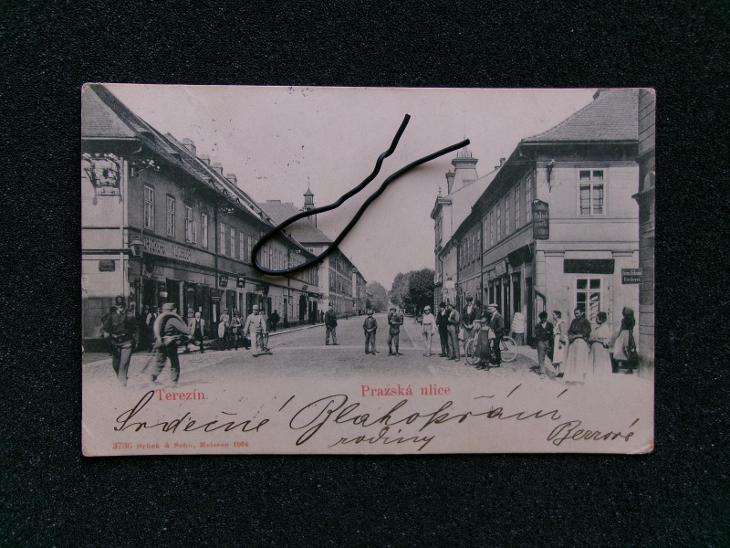
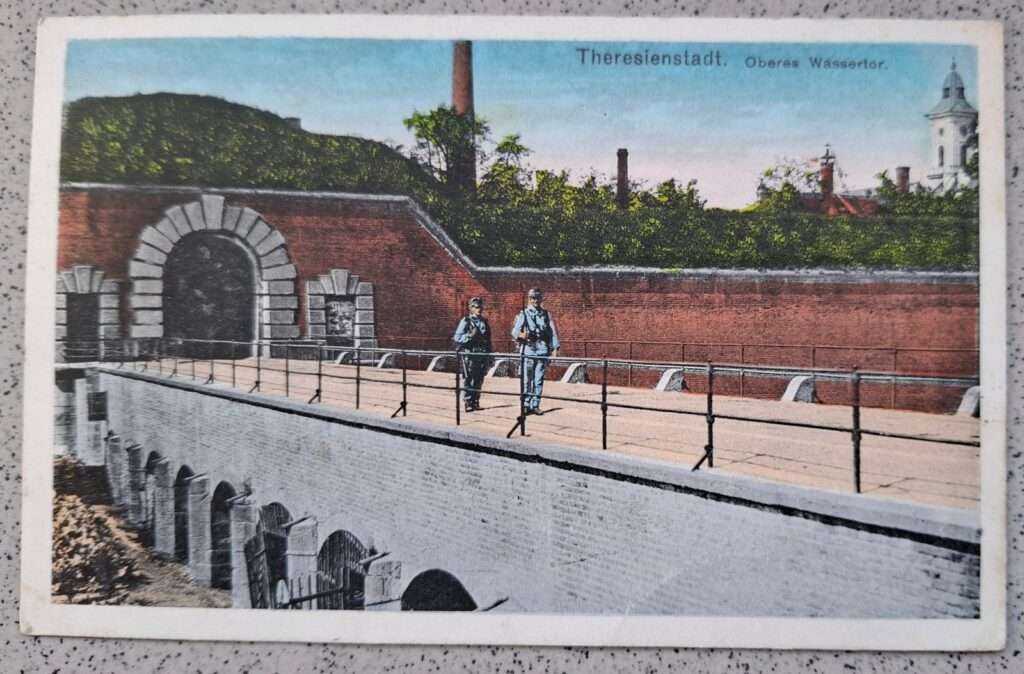
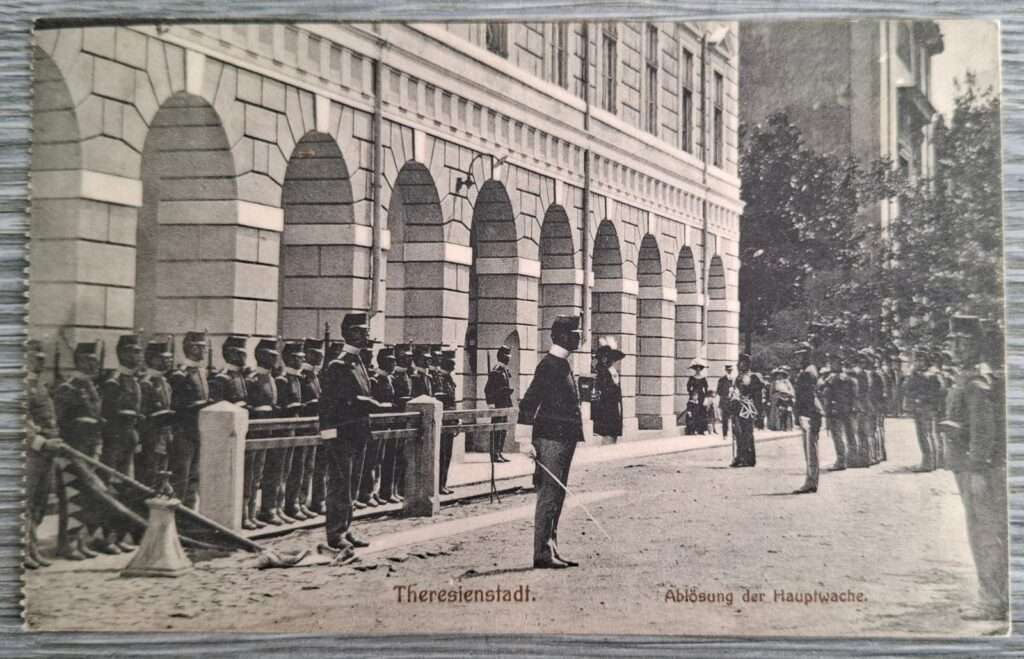

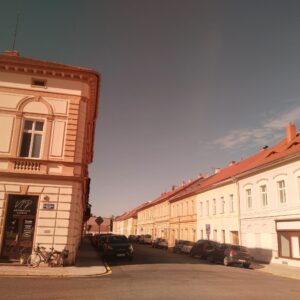
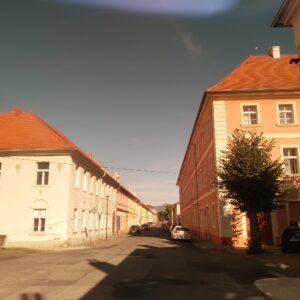
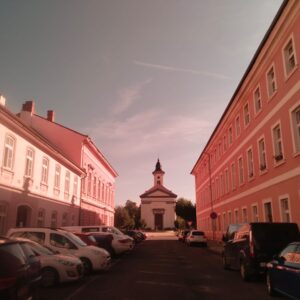
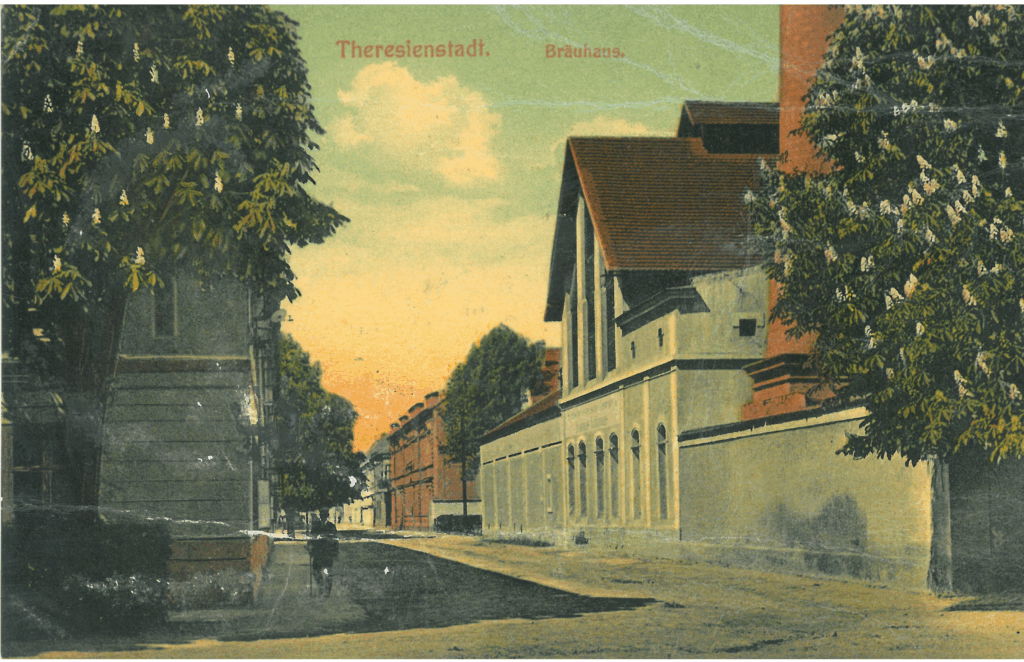
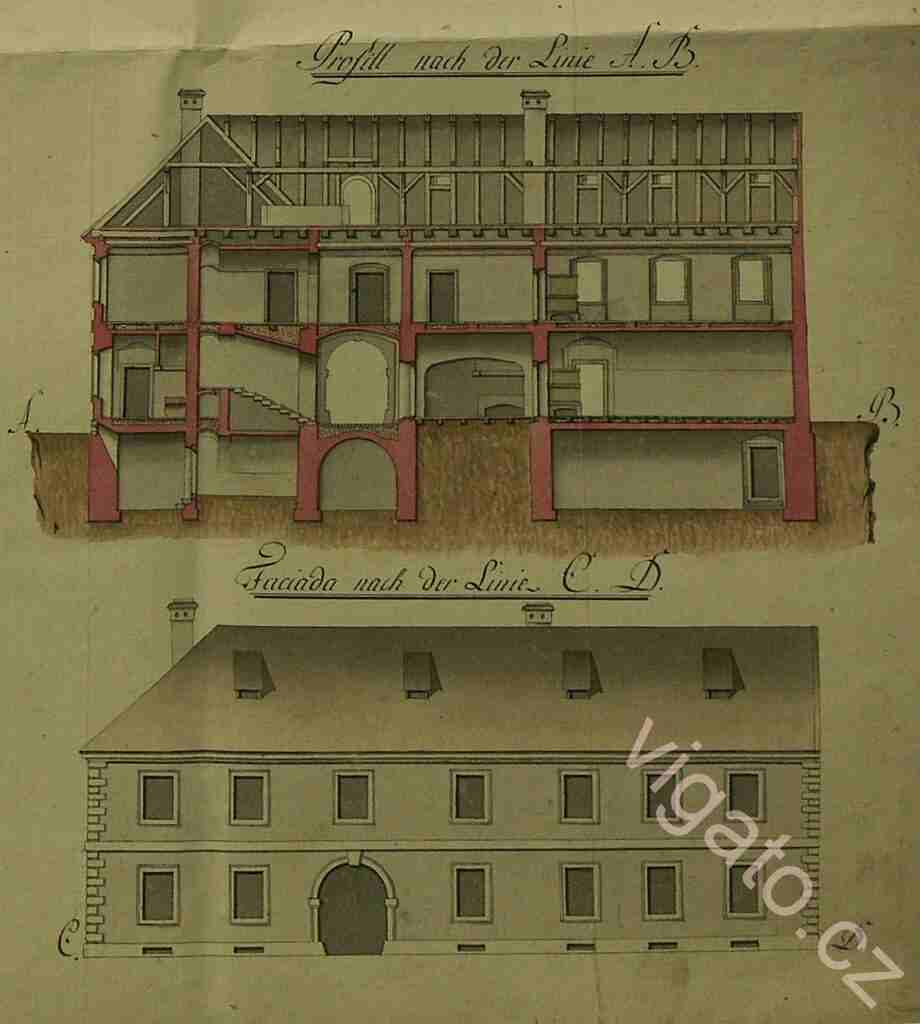
An imperial decree in 1782 granted Terezín the status of a free royal town. The military administration brought in civilian craftsmen essential for maintaining the fortress and supporting the garrison, though an independent civil administration was not established until 1830. Construction of the town followed a strict urban plan featuring a grid system of streets with a central square and a church. For safety and tactical reasons, strict height regulations applied—houses could not exceed 14 meters in height (maximum one to two floors), and their ground floors featured sturdy semicircular vaults. As a result, only the rooftops of a few buildings were visible from the surrounding terrain, dominated by the tower of the Garrison Church of the Resurrection of Christ.
Historical Milestones and Decline
The fortress ultimately never served its original combat purpose in a major siege. The outbreak of the French Revolution pushed conflicts between Austria and Prussia into the background at the end of the 18th century, though the fortress was kept in a state of combat readiness due to potential French threats. However, Napoleon’s troops never marched on Terezín. Following the suppression of the revolutionary movements in 1848–1849, tensions between Berlin and Vienna revived, culminating in the war of 1866. Yet, the fortress was never besieged; Prussian forces bypassed it, and only minor skirmishes took place in the vicinity.
In 1879, a Dual Alliance agreement was signed between Germany and Austria, and nine years later, an imperial decree officially terminated Terezín’s military fortress status. From the mid-19th century onward, the casemates of the Terezín fortress served as a prison for numerous revolutionaries—Gavrilo Princip, the Sarajevo assassin, died here. In 1918, captured participants of the Rumburk rebellion were cast into its cells, only to be freed by the October events.
The Dark Chapter of the Twentieth Century
A critical turning point in modern history occurred on June 10, 1940, when the Prague Gestapo took over the Small Fortress to establish a police prison. The first prisoners arrived the very next day to begin construction work on the facility. As the number of prisoners grew, construction of new buildings and facilities continued uninterrupted throughout the occupation. In October 1941, Terezín was selected as the site for a transit and concentration camp—the Jewish ghetto. By the summer of 1942, barracks capacities were exhausted, and the Czech civilian population was forced to evacuate. Terezín became a transit station on the path to extermination camps, with roughly 160,000 people passing through it by the end of the occupation (including 33,000 through the Small Fortress).
The town was liberated during the night of May 8–9, 1945, by the 3rd Guards Tank Army under Colonel-General Rybalko as it advanced toward Prague.
Glossary of Fortification Terms
- Bastion: A primary pentagonal defensive structure located at angles in the fortress perimeter.
- Counterguard: A fortification advanced in front of a bastion.
- Counterscarp: The outer wall of a defensive ditch.
- Curtain: The straight connecting wall between two bastions.
- Double Caponier (Earth Trunk): A secure covered structure within the ditch used for defense.
- Gallery: A covered vaulted corridor inside fortification elements.
- Cavalier: An independent four-sided rampart located inside a bastion.
- Mine and Listening Gallery: Underground tunnels designed to place explosive charges or monitor enemy earthworks.
- Pincer Works (Kleště): Two arms forming an obtuse angle, lower wall in the ditch protecting the curtain from direct fire.
- Ravelin: A detached fortification (three- or five-sided) advanced in front of the pincers.
- Reduit: A smaller independent fortification situated inside a ravelin.
- Retranchement: An elevated superstructure on a bastion or ravelin.
- Traverse: A transverse defensive rampart on a covered way.